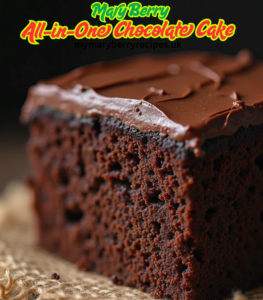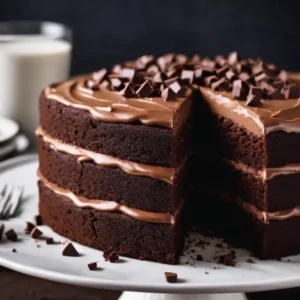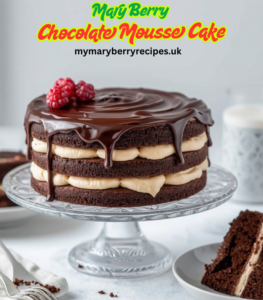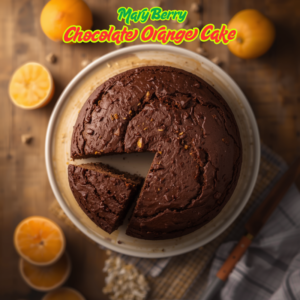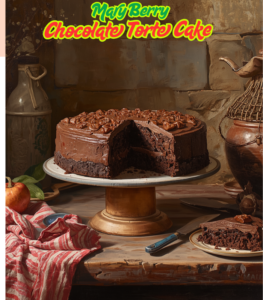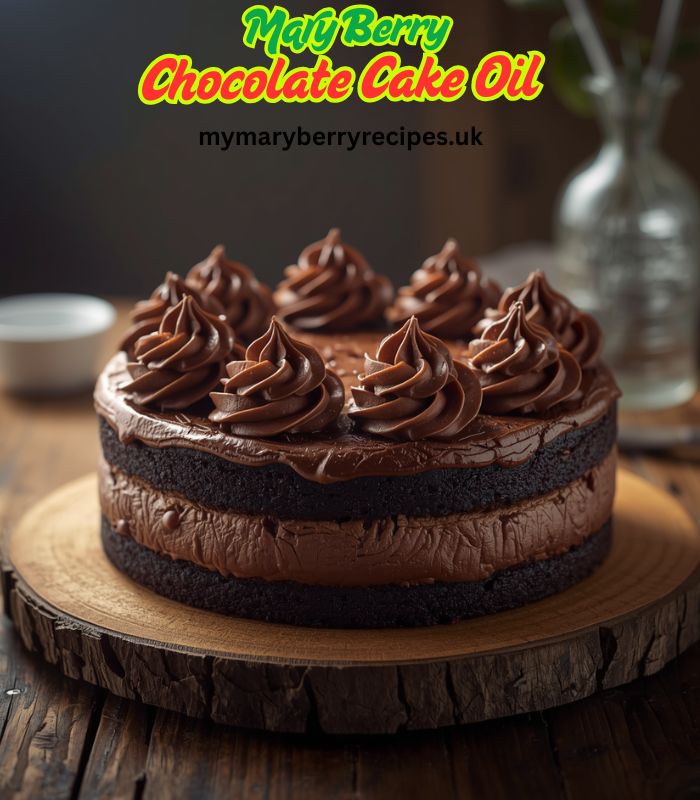
This Mary Berry Chocolate Cake with Oil Recipe delivers a deeply chocolatey, tender crumb that melts in your mouth with no complicated technique required. Honestly, once you bake a chocolate cake with oil instead of butter, it’s hard to go back. Oil-based cakes stay moist for days — no drying out by the next morning, no crumbly edges when you slice it cold. This If you’ve ever been disappointed by a dry chocolate sponge, this is the recipe that’ll change everything.
What You’ll Need for This Chocolate Cake with Oil Recipe
Main Ingredients
- 200g plain flour, sifted
- 250g caster sugar
- 75g good-quality cocoa powder
- 2 tsp baking powder
- 1 tsp bicarbonate of soda
- ½ tsp salt
- 2 large eggs, room temperature
- 240ml whole milk
- 120ml neutral vegetable oil (sunflower or rapeseed)
- 2 tsp vanilla extract
- 240ml boiling water
For the chocolate frosting:
- 200g dark chocolate, melted
- 150g icing sugar
- 100g unsalted butter, softened
Ingredient Insights
Oil instead of butter isn’t a shortcut — it’s a deliberate choice. Oil coats the flour proteins more evenly than butter does, which means the crumb stays tender and moist even after a day or two in the tin. Butter solidifies when cold; oil never does.
Cocoa powder is where this cake either sings or falls flat. Dutch-processed cocoa gives a smoother, less acidic flavor that works beautifully here. Avoid budget cocoa if you can — the difference in taste is genuinely noticeable.
Eggs and sugar work together to build structure and sweetness. Room-temperature eggs blend more evenly into the batter, while caster sugar dissolves faster and more completely than granulated, giving you a finer, more even crumb throughout.
Baking Setup and Preparation
Cake Tin and Preparation
Two 20cm (8-inch) round sandwich tins work best for a classic layered look. Grease both tins generously with oil or butter, then line the bases with baking parchment circles. This recipe produces a fairly liquid batter, so don’t skip the lining — it makes turning out the layers completely worry-free.
Quick Prep Tips
Preheat your oven to 180°C (160°C fan) / Gas Mark 4 before you touch a single ingredient. Measure everything out into separate bowls beforehand — this recipe moves quickly once you start mixing, and scrambling for the cocoa mid-batter is a recipe for mistakes. Weigh accurately; baking doesn’t forgive guesswork the way cooking does.
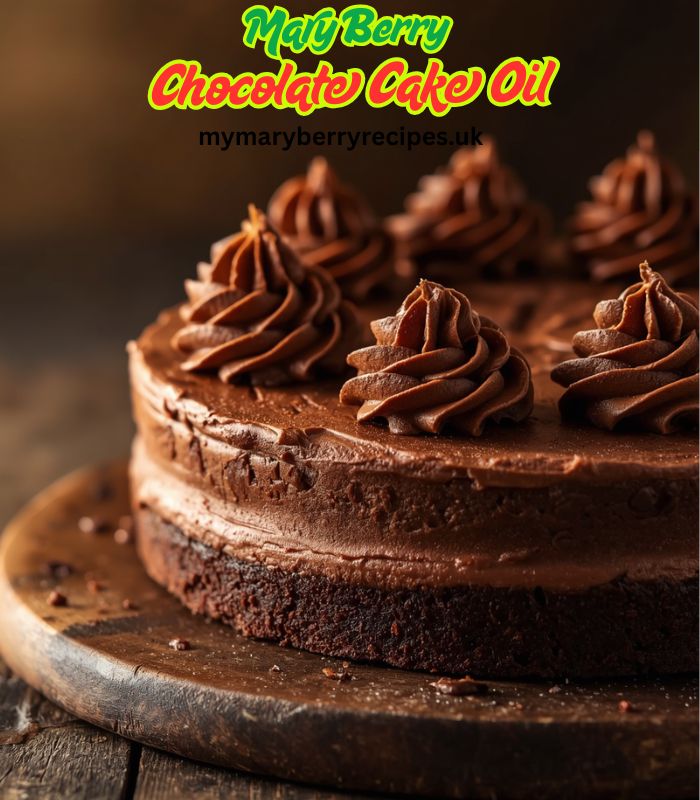
How to Make Mary Berry Chocolate Cake with Oil
Mixing the Wet Ingredients
In a large mixing bowl, whisk together the eggs, caster sugar, vegetable oil, and vanilla extract until smooth and slightly thickened — about 2 minutes by hand or 1 minute with an electric whisk. The mixture should look glossy and well-combined before anything else goes in.
Adding Dry Ingredients
Sift the flour, cocoa powder, baking powder, bicarbonate of soda, and salt directly into the wet mixture. Sifting is non-negotiable here — cocoa powder is notorious for clumping, and those lumps never fully disappear once baking starts.
Combining the Batter
Pour in the milk and gently fold everything together. Once the batter looks mostly smooth, carefully stir in the boiling water. Yes, the batter will become very thin and loose — that’s completely intentional. The hot water blooms the cocoa, creating that intensely deep chocolate flavor. Don’t panic; just pour it evenly between your prepared tins.
Baking the Cake
Slide both tins onto the middle shelf of your preheated oven. Bake for 30–35 minutes, swapping the tins around at the halfway point if your oven has hot spots. Avoid opening the door in the first 25 minutes — the sudden temperature drop can cause the centers to sink.
Checking Doneness
The cakes should have pulled slightly away from the edges and feel firm but springy in the center. A skewer inserted into the middle should come out completely clean. Leave in the tins for 10 minutes, then turn onto a wire rack to cool fully before frosting.
Baking Tips for Best Results
Mistakes to Watch Out For
The biggest mistake people make with this recipe is overmixing after adding the dry ingredients. Stir until just combined — a few light streaks are fine. Overmixing develops gluten, turning a tender cake tough and chewy.
Temperature also matters more than people realize. An oven that runs too hot sets the outside before the center is cooked, leaving you with a dry ring around a gummy middle. An oven thermometer is a worthwhile investment if you bake regularly.
Making the Cake Extra Moist
Brush each sponge layer with a thin simple syrup (equal parts sugar and water, simmered briefly) just before frosting. It sounds fussy, but it takes two minutes and adds a layer of moisture insurance. Also, don’t skip the boiling water in the batter — it genuinely makes the difference between a good cake and an exceptional one.
Serving Ideas and Storage Tips
How to Serve
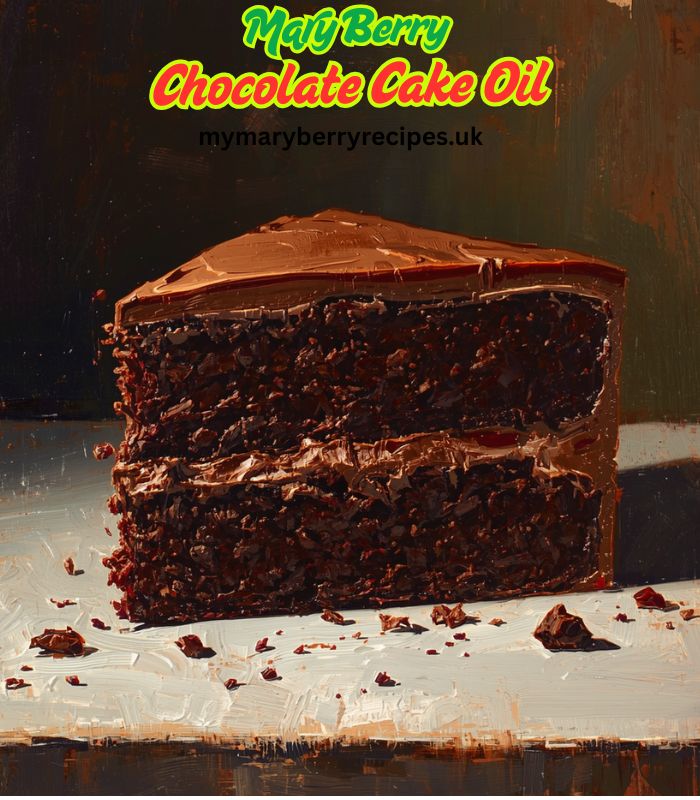
Sandwiched with chocolate buttercream and finished with a smooth ganache, this cake is a showstopper. Equally good served simply dusted with icing sugar alongside a cup of strong tea. For a dinner party, a warm slice with pouring cream and a scattering of fresh raspberries feels genuinely elegant.
Storage Guide
At room temperature in an airtight tin, this cake keeps beautifully for 3–4 days — the oil prevents it from drying out the way a butter cake would. Refrigerate if the kitchen is warm, but always bring slices back to room temperature before eating. Individual slices freeze well for up to 2 months; thaw at room temperature for an hour before serving.
Quick Nutrition Overview
Each slice (12 servings, without frosting) contains roughly 280–310 calories, largely from oil, sugar, and flour. The dark chocolate frosting adds approximately 90–110 calories per slice. It’s an indulgent bake, but a properly made one where every calorie earns its place.
FAQs
Can I Replace Oil with Butter?
You can, but the result won’t be the same. Melted butter can be used as a direct swap in equal quantities, but the cake will firm up when cold and dry out faster. If you want that stay-moist quality, stick with oil — it’s the whole point of this version.
Which Oil Works Best for Chocolate Cake?
Any neutral-flavored oil works perfectly — sunflower, rapeseed, and light vegetable oil are all excellent choices. Avoid olive oil or coconut oil; their distinct flavors compete with the chocolate rather than letting it shine through.
Can I Make This Cake Without Eggs?
Yes. Replace each egg with 3 tablespoons of aquafaba (the liquid from a tin of chickpeas) — it sounds odd but works remarkably well in chocolate cake. A flax egg (1 tbsp ground flaxseed + 3 tbsp water, rested for 5 minutes) is another reliable option for a fully vegan bake.
Why Is My Cake Dry or Flat?
A dry cake usually means overbaking or too much flour from inaccurate measuring. Spoon flour gently into your scales rather than scooping from the bag. A flat cake points to old leavening agents — baking powder and bicarbonate of soda lose their potency over time, so check the dates before you start.
Conclusion
This Mary Berry Chocolate Cake with Oil Recipeis proof that the best results often come from the simplest adjustments. Swap out the butter, trust the thin batter, and you’ll pull something extraordinary out of the oven every single time. 🍫
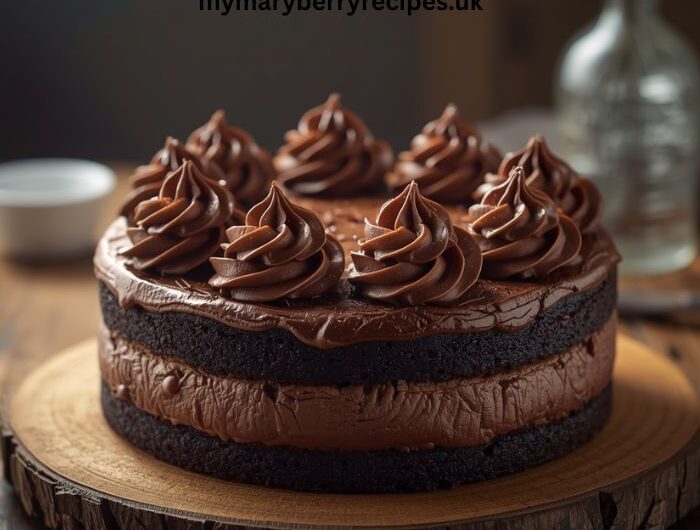
Mary Berry Chocolate Cake with Oil Recipe
Course: Desserts4
servings30
minutes40
minutes300
kcalIngredients
200g flour
200g sugar
50g cocoa powder
2 eggs
120ml oil
1 tsp baking powder
150ml milk
Directions
- Preheat oven to 180°C.
- Mix sugar, eggs, oil, and milk.
- Add flour, cocoa, baking powder.
- Mix to smooth batter.
- Pour into cake tin.
- Bake 30–35 minutes.
Notes
- Oil makes cake soft and moist
- Do not overbake
- Cool before frosting
- Chocolate ganache goes well on top