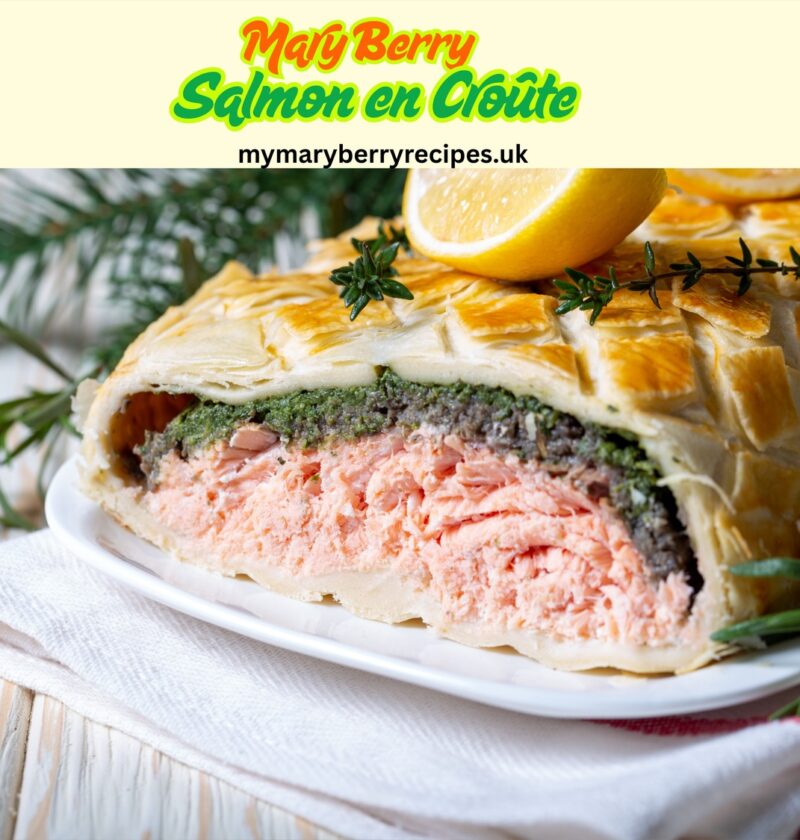
There are some dishes that just feel like a celebration the moment they hit the table. Mary Berry Salmon en Croûte recipe is one of them. Wrapped in golden, flaky pastry with a beautifully seasoned filling, it looks like something you would order at a fancy restaurant — but the truth is, you can make it right in your own kitchen, without any professional training.
Whether you are cooking for guests or treating your family to something a little special mid-week, this dish delivers every single time.
Why this dish is classic: What makes Mary Berry’s approach so appealing is that she never overcomplicates things. She understands that home cooks want results that look impressive without requiring hours of effort. Her recipe brings together a creamy herb filling, quality salmon fillets, and buttery pastry in a way that feels both refined and comforting.
Ingredients for Salmon en Croûte Recipe
Main Ingredients Overview
Here is what you will need to make this dish for four to six people:
- 2 salmon fillets (each around 400–500g), skin removed
- 500g ready-made puff pastry (all-butter, if possible)
- 200g full-fat cream cheese
- 1 lemon, zested and juiced
- A handful of fresh dill or flat-leaf parsley, finely chopped
- 2 tablespoons of wholegrain or Dijon mustard
- Salt and freshly ground black pepper
- 1 egg, beaten (for egg wash)
- Optional: a couple of handfuls of fresh spinach
These are simple, easy-to-find ingredients. Nothing too obscure, nothing too expensive. That is part of the beauty of this salmon pastry recipe.
Choosing Fresh Salmon and Pastry
The quality of your salmon matters more than almost anything else here. Look for fillets that are bright in colour, smell fresh (not overly fishy), and have a firm texture when pressed gently. Wild-caught salmon tends to have a more intense flavour, while farmed salmon is milder and often more affordable — either works beautifully.
For the pastry, always go for all-butter puff pastry if you can find it. The flavour is noticeably better, and it puffs up more evenly in the oven. Most supermarkets carry it in the chilled section. If you have the time and confidence, homemade shortcrust pastry is an option, but honestly, shop-bought puff pastry is what most people — including many professional chefs — use for this dish, and it works wonderfully.
How to Make Step-by-Step Instructions
Making the Salmon Filling
Start by making your cream cheese filling. In a bowl, mix together the cream cheese, lemon zest, lemon juice, mustard, and chopped fresh herbs. Season generously with salt and pepper, then taste and adjust as needed. You want it to be bright, creamy, and fragrant.
If you are using spinach, wilt it briefly in a pan with a tiny knob of butter, then squeeze out as much water as possible. Excess moisture is the enemy here — it can make your pastry soggy. Roughly chop the spinach and stir it through the cream cheese mixture.
Set the filling aside while you prepare the pastry.
Wrapping the Salmon in Pastry
Preheat your oven to 200°C (180°C fan) or Gas Mark 6.
Roll out your puff pastry on a lightly floured surface into a large rectangle. It should be big enough to wrap around both salmon fillets with a few centimetres to spare on each side.
Place one salmon fillet in the centre of the pastry. Spread the cream cheese filling evenly over the top of it. Then lay the second fillet on top, like a sandwich. This layered approach keeps the filling in place and ensures every slice has a generous amount of it.
Brush the edges of the pastry with beaten egg. Fold the pastry over the salmon, pressing the edges firmly to seal. Trim away any excess, crimp the edges with a fork, and flip the whole parcel over so the seam is underneath. This gives you a much tidier finish.
Place it on a lined baking tray and brush the top generously with more egg wash. Use a sharp knife to score a light diamond or leaf pattern on the surface — this both looks beautiful and allows steam to escape during baking.
Easy Baking Tips
Perfect Oven Temperature and Timing
Bake your homemade salmon pie in the centre of the oven at 200°C (180°C fan) for around 25 to 30 minutes. The pastry should be deeply golden and crisp, and the salmon should be cooked through.
If you have a larger or thicker fillet, add an extra five minutes. A good way to check doneness is to insert a skewer or thin knife into the centre of the parcel and leave it there for five seconds — if it comes out warm to the touch, the salmon is ready.
Let the dish rest for five minutes before slicing. This helps everything hold together much more neatly when you cut into it.
How to Get a Golden, Crispy Crust
Getting that gorgeous, even golden colour on the pastry comes down to two things: the egg wash and the oven temperature.
- Apply two coats of beaten egg — one before refrigerating (if resting it), and one just before it goes in the oven.
- Make sure your oven is fully preheated before the dish goes in. A cold start is one of the most common reasons pastry turns out pale and soft.
- Bake on the middle shelf, never the top. Too close to the top element can cause the pastry to colour too quickly on the outside before the salmon finishes cooking.

Flavor and Texture Tips
Expert Techniques for Moist Salmon and Smooth Filling
The cream cheese filling does double duty here — it flavours the fish and keeps it moist during baking. The fat in the cheese creates a kind of protective layer that stops the salmon from drying out.
A few things to keep in mind:
- Do not skip the mustard. It adds a subtle tang that cuts through the richness of both the fish and the pastry.
- Fresh herbs make a real difference. Dried herbs will do in a pinch, but fresh dill, tarragon, or flat-leaf parsley give the filling a brighter, more vibrant flavour.
- Bring your salmon to room temperature for about 15 minutes before assembling. Cold fish straight from the fridge takes longer to cook and can lead to overcooked pastry.
Common Mistakes to Avoid
How to Fix Common Errors
Even with a reliable recipe, a few things can go wrong. Here is what to watch for:
Soggy pastry at the bottom. This usually happens when the filling has too much moisture. Always squeeze your spinach dry and avoid adding too much lemon juice to the cream cheese mixture.
Pastry not sealing properly. Make sure you brush the edges with egg wash before pressing them together. Dry pastry edges will not stick, and the parcel can open up in the oven.
Overcooked salmon. If the pastry is going golden too quickly but the fish is not done yet, loosely tent the dish with foil and continue baking. This slows the browning without stopping the cooking.
Filling sliding out when you slice it. Allow the dish to rest before cutting, and use a very sharp knife. A serrated bread knife can also help here.
Variations and Substitutions
Adding Spinach, Cream Cheese, or Herbs
The easy salmon en croûte is wonderfully adaptable. Once you know the basic structure, you can adjust the filling to suit your taste or what you have on hand.
- Spinach and cream cheese: A classic combination. The earthiness of the spinach pairs perfectly with the richness of the cream cheese and the delicacy of the salmon.
- Smoked salmon layer: Add a thin layer of smoked salmon between the fresh fillets for a deeper, smokier flavour.
- Capers and dill: Stir a tablespoon of capers into the cream cheese mixture alongside dill for a more briny, Scandinavian-style flavour profile.
- Tarragon and crème fraîche: Swap the cream cheese for crème fraîche and use tarragon instead of dill. The result is slightly lighter and very elegant.
- Shortcrust instead of puff: If you prefer a sturdier crust, shortcrust pastry works well. It is less flaky but holds its shape beautifully when sliced.
Storage and Reheating
Keeping the Pie Fresh
Salmon en Croûte is best eaten the day it is made, when the pastry is at its crispest. That said, leftovers can absolutely be kept and enjoyed the next day.
Store any remaining portions in an airtight container in the fridge for up to two days. To reheat, place slices on a baking tray in an oven preheated to 180°C for about 10 to 15 minutes. Avoid the microwave — it will make the pastry chewy and the salmon rubbery.
You can also prepare the parcel up to 24 hours ahead of time, keeping it assembled but unbaked in the fridge. Brush with egg wash just before it goes into the oven. This makes it incredibly convenient for entertaining.
Serving Suggestions
Best Side Dishes to Pair
This dish is rich and substantial, so lighter sides work best. Here are some pairings that complement it beautifully:
- New potatoes with butter and chives — simple and classic
- Steamed tenderstem broccoli or green beans — adds colour and freshness
- A simple green salad with a sharp lemon vinaigrette to cut through the richness
- Hollandaise or a dill cream sauce for something more indulgent
- Roasted asparagus — particularly lovely in spring
A chilled glass of dry white wine, such as a Sauvignon Blanc or an unoaked Chardonnay, pairs beautifully with the salmon and pastry combination.
FAQs About Salmon en Croûte
Can I use frozen salmon for this recipe? Yes, but make sure it is completely thawed and patted dry with kitchen paper before using it. Excess water from frozen fish can make the pastry soggy.
Can I make the Mary Berry Salmon en Croûte Recipe ahead of time? Absolutely. You can assemble the whole thing the night before, cover it with cling film, and refrigerate it unbaked. Apply the egg wash just before baking. This makes it ideal for dinner parties.
What is the difference between salmon en croûte and salmon Wellington? They are very similar. Salmon Wellington often includes a layer of mushroom duxelles (finely chopped, cooked mushrooms) in addition to the herb filling, borrowing from the classic Beef Wellington technique. Salmon en Croûte typically focuses on a cream cheese or spinach-based filling.
My pastry puffed up unevenly. What went wrong? This can happen if the pastry was too warm when it went into the oven, or if it was not scored on top. Make sure your assembled parcel is well chilled before baking, and always score the top to allow steam to escape.
Can I freeze salmon en croûte? It is possible to freeze it before baking, though the texture of the pastry can suffer slightly. If you do freeze it, bake straight from frozen at 180°C and add around 15 to 20 extra minutes to the cooking time. Baked leftovers do not freeze particularly well.
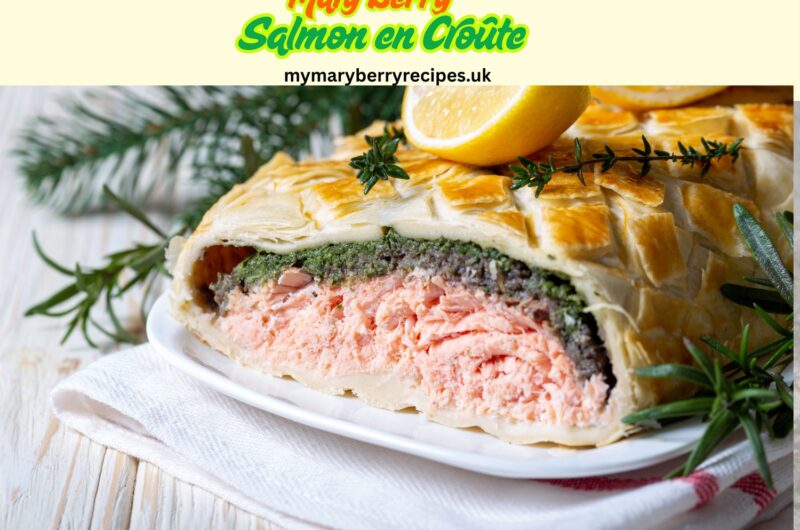
Mary Berry Salmon en Croûte Recipe
Course: SalmonCuisine: BritishDifficulty: Easy4
servings30
minutes40
minutes300
kcalIngredients
Salmon fillet
Puff pastry
Spinach
Cream cheese
Egg (for glaze)
Lemon zest
Salt & pepper
Directions
- Cook spinach lightly & cool
- Mix with cream cheese + seasoning
- Place salmon on pastry, spread mixture on top
- Wrap pastry around salmon
- Brush with egg
- Bake at 200°C ~25–30 min
Notes
- Keep pastry cold before baking
- Don’t overcook salmon
- Seal edges well
- erve immediately for crisp pastry