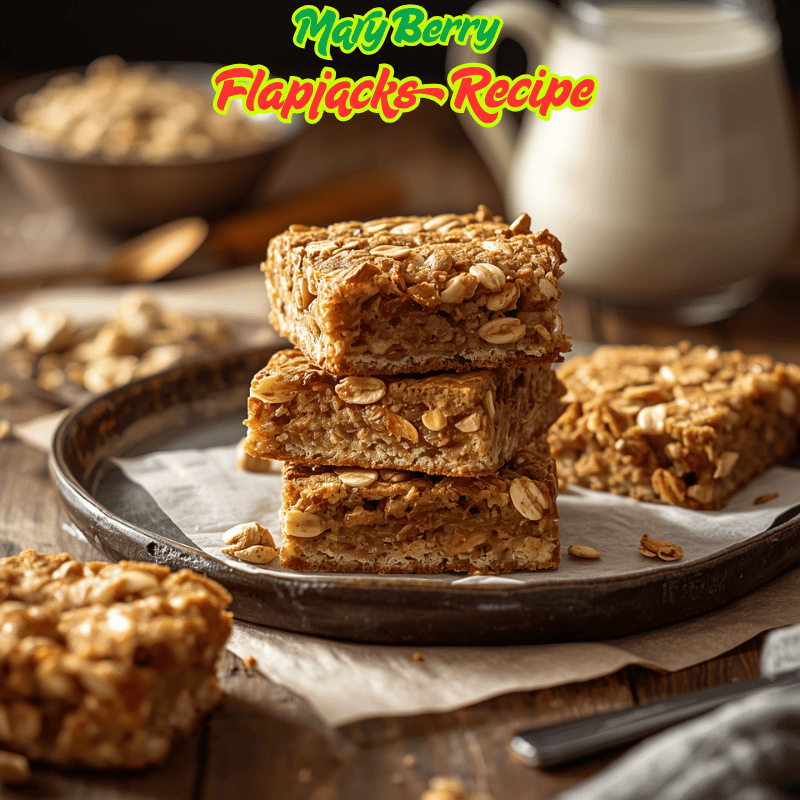
The Mary Berry Flapjacks Recipe operates on this simplicity with the kind of care that distinguishes a genuinely good result from something merely acceptable. The whole process takes barely 30 minutes, yet the outcome — a tray of chewy oat bars with golden edges and a dense, glossy centre — carries a quality that rewards the minimal effort disproportionately. What makes this particular flapjack worth making is less about the ingredient list and more about the ratio and baking time.
The Texture Contrast That Makes Mary Berry Flapjacks Recipe So Moreish
How Oats, Butter, and Syrup Create Balance
The texture of a flapjack is determined by three variables: the ratio of butter to syrup, the ratio of sweet ingredients to oats, and the baking time. Each affects the final consistency directly. More butter relative to syrup produces a crumblier result; more syrup produces a stickier, chewier bar. A higher proportion of oats produces a drier, more substantial bar; reduce the oats and the flapjack becomes denser. Understanding this means the recipe is not a fixed formula but a set of relationships.
Small Baking Details That Improve Texture
Salted butter rather than unsalted is worth using — the salt suppresses the cloying quality a very sweet flapjack can develop and adds a background sharpness that makes the bars taste considerably more considered. A tablespoon of treacle replacing one tablespoon of golden syrup adds a darker, more complex sweetness without fundamentally altering the texture.
Bringing the Traybake Mary Berry Flapjacks Recipe Together Step by Step
- Oat Mixture Stage: The butter, sugar, and golden syrup are melted together over a low heat until smooth and glossy. The moment when you can smell the syrup beginning to caramelise signals the heat is right. Remove from heat and stir in the oats.
- Sweetness Balance Moment: The oats are stirred through the warm mixture until every grain is coated evenly. Uneven coating means the edges of the tin receive more butter and syrup than the centre, producing inconsistent baking. Check that the mixture looks uniformly glossy.
- Baking Transition: Pressed into a lined 20 x 30cm tin, the flapjack bakes at 160°C (140°C fan) for 20 to 25 minutes. Edges that are noticeably darker gold than the pale centre are the correct visual cue. If the entire surface colours evenly, the bake has run too long.
- Cooling Phase: The flapjack must cool completely before cutting — at least one hour. Cut while warm, it will crumble because the structure has not yet set. Once cool, the centre will be firm but giving, and the bars will hold their shape.
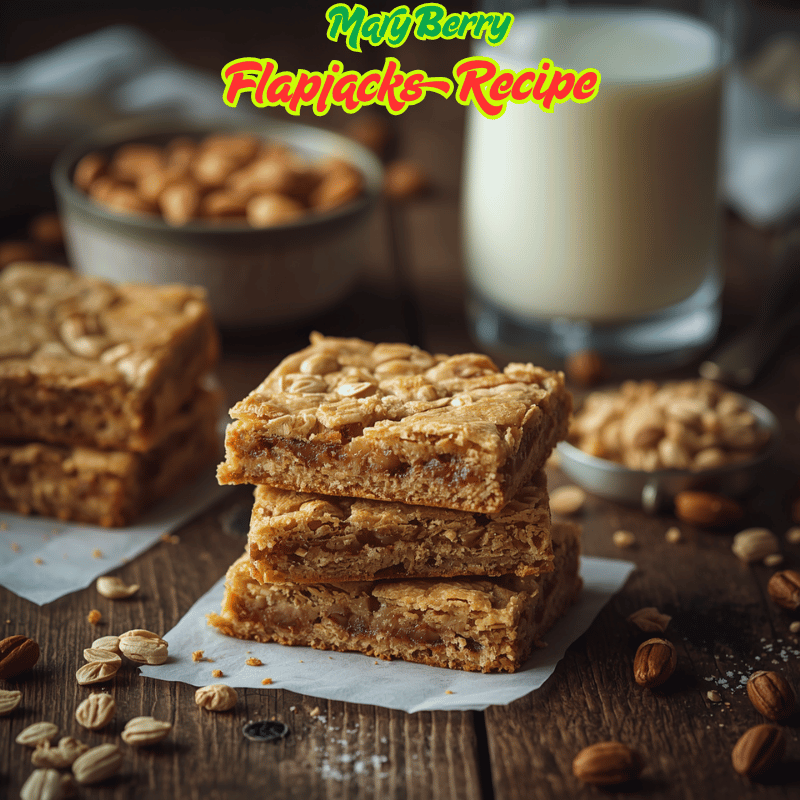
Finding the Right Balance Between Softness and Crunch
Where Flapjacks Can Become Too Dry or Crumbly
Dryness and crumbling often have the same root cause: too much oat relative to the wet mixture, or a baking time extended past the point where the bars can retain moisture. A flapjack that looks completely even in colour across the surface has almost certainly dried out. The opposite problem — bars too wet and sticky to hold — usually indicates insufficient baking or too much syrup relative to oat.
Simple Fixes That Improve the Texture
Reducing the oven temperature and extending the baking time slightly produces a more consistently textured bar — lower heat allows moisture to leave gradually rather than rapidly. Adding a tablespoon of plain flour to the oat mixture also helps bind the bar without affecting the flavour.
Easy Flavor Variations That Add Character
Flavor Ideas to Try
- Fruit Addition: Dried cranberries, chopped dates, or raisins stirred through the oat mixture before baking add concentrated sweetness and a slight chewiness. Use roughly 100g for a standard traybake and reduce the sugar by one tablespoon to compensate.
- Chocolate Drizzle: Dark chocolate drizzled over the cooled flapjack adds a slight bitterness that cuts through the sweetness of the oat traybake. Apply after cutting so the chocolate sets in lines rather than pooling.
- Nutty Crunch: A handful of pumpkin seeds or flaked almonds mixed through the oat mixture adds texture and subtle nuttiness. Toasting the nuts briefly in a dry pan beforehand intensifies the effect considerably.
Serving Mary Berry Flapjacks in a Simple Homemade Style
Presentation That Feels Cozy
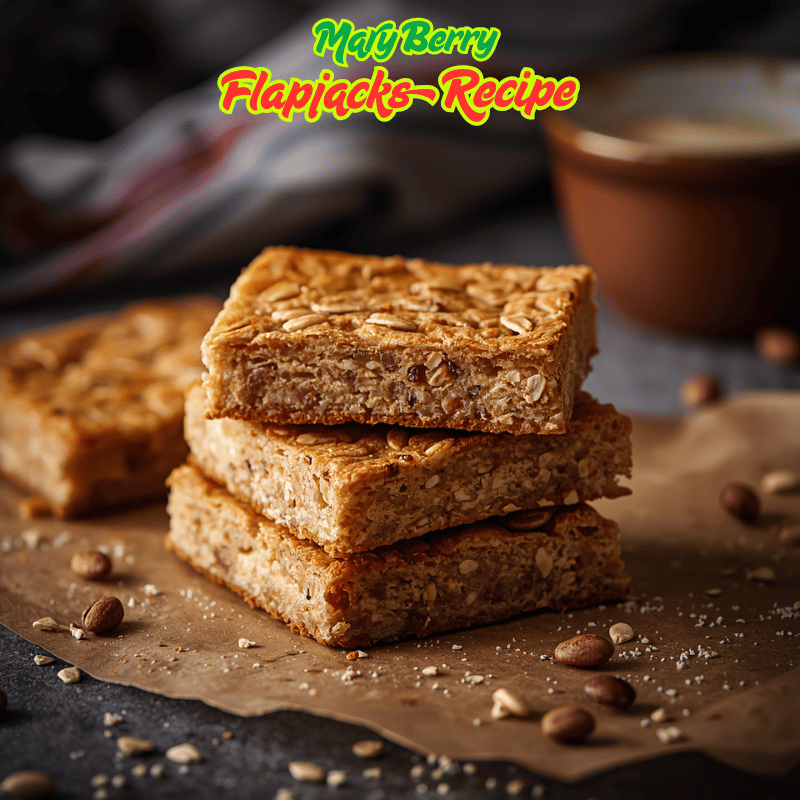
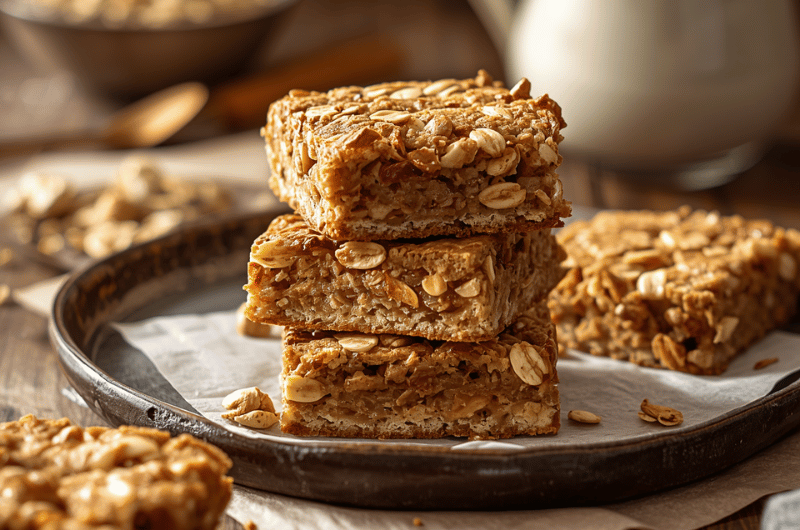
Cut flapjacks cleanly with a sharp knife while still slightly warm rather than fully cold — this produces a cleaner edge with less crumbling. Arranged in a tin or stacked on a plate, they look exactly as they should: golden, honest, and unpretentious.
What Pairs Naturally with the Bake
Strong tea — Assam, English Breakfast, or Yorkshire — sits naturally alongside a chewy oat bar. The tannins in a good brew balance the sweetness without competing. A flat white or filter coffee also works well, particularly with the treacle variation.
Keeping the Mary Berry Flapjacks Recipe Fresh and Chewy
Stored in an airtight container at room temperature, flapjacks keep well for up to five days. After this they begin to dry out. Refrigeration does not help — the cold makes them harder.
A Warm and Homemade Final Thought
The Mary Berry Flapjacks Recipe is the kind of bake that gets made repeatedly over a lifetime — not because it is complicated or impressive, but because it is reliable and specifically satisfying. A well-made flapjack, buttery and properly caramelised at the edges, does not pretend to be anything other than what it genuinely is.
FAQs
Can I use quick oats instead of rolled oats?
Quick oats produce a denser, smoother result. Rolled oats are correct for this recipe. Jumbo oats are also a good option if you prefer more visible texture in the finished bar.
Why did my flapjacks fall apart when I cut them?
Almost certainly cut too early. Warm flapjack will always crumble — leave the tin undisturbed for at least an hour. A sharp knife pressed in a single downward motion produces cleaner cuts.
How do I know when flapjacks are properly baked?
The edges should be clearly darker gold than the paler centre — typically between 20 and 25 minutes at 160°C (140°C fan). If the entire surface looks the same colour, the bars will be overdone.
Can I reduce the sugar in a flapjack recipe?
Reducing the sugar by around 20 per cent is possible without fundamentally altering the texture. Reducing it significantly produces a drier bar because sugar contributes to binding as well as flavour.
What type of golden syrup works best?
Regular supermarket golden syrup works perfectly. Avoid maple syrup or honey in equal substitution — they have different moisture levels and alter the texture considerably.
How long do homemade flapjacks last?
Up to five days in an airtight container at room temperature. Refrigeration makes them harder without improving shelf life.
Can I freeze flapjacks?
Yes. Freeze in a single layer, then transfer to a sealed bag for up to two months. They defrost at room temperature in around 30 to 45 minutes.
Mary Berry Flapjacks Recipe
Course: DessertCuisine: BritishDifficulty: Easy4
servings30
minutes40
minutes300
kcalIngredients
Porridge oats
Butter
Brown sugar
Golden syrup
Plain flour (optional)
Directions
- Preheat oven to 180°C.
- Melt butter, sugar + golden syrup.
- Stir in oats (and flour if using).
- Press mixture into baking tin.
- Bake 20–25 mins until golden.
- Cool slightly, then cut into squares.
Notes
- Don’t overbake (keep chewy)
- Press mixture firmly into tin
- Cool before fully removing
- Add raisins or chocolate if desired