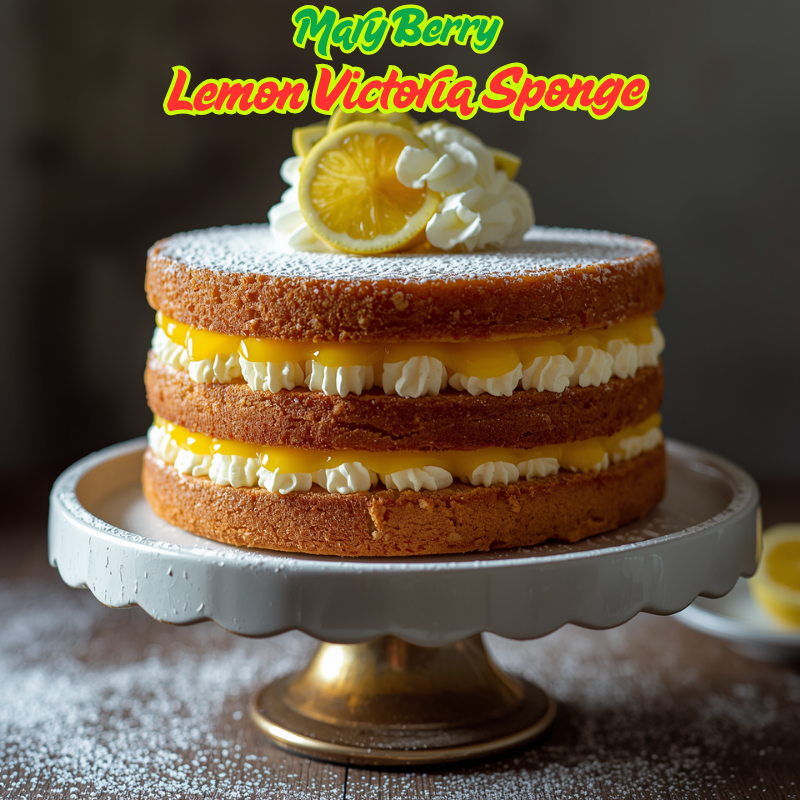
The Mary Berry Lemon Victoria Sponge Recipe takes the most beloved British cake and lifts it with a sharpness the original never quite achieves. Lemon transforms an already light sponge into something almost effervescent. The airy lemon cake that results is neither fussy nor elaborate, yet it draws every eye toward it — simplicity made more alive.
The Flavor Foundations Mary Berry Lemon Victoria Sponge Recipe
How Each Element Shapes the Final Taste
Self-raising flour provides lift; softened butter carries fat and flavour through the crumb. Caster sugar and four eggs beaten together with the butter create the pale, airy batter the classic layered sponge depends on. The lemon — zest into the batter, juice into the buttercream — flavours this version from within, giving every slice that unmistakable citrus depth.
Subtle Enhancements That Bring Everything Together
A teaspoon of lemon extract in the buttercream amplifies the citrus. Lemon curd spread beneath it adds a gorgeous tartness.
Bringing the Mary Berry Lemon Victoria Sponge Recipe Together Step by Step
- Base Consistency: Cream the butter and caster sugar until genuinely pale and increased in volume — at least five minutes. Add the lemon zest at this stage so the oils bloom into the fat.
- Air Retention: Beat in the eggs one at a time with a tablespoon of flour added with the last to prevent curdling. Fold in the remaining flour using a large metal spoon — never a mixer at this stage.
- Citrus Distribution: Scrape the batter into two greased and lined 20cm sandwich tins. Weigh each portion for level layers — kitchen scales remove any guesswork entirely.
- Baking Transformation: Bake at 180°C (160°C fan) for 20 to 25 minutes until risen, golden, and springing back firmly when pressed. Cool in the tins for five minutes before turning out onto a wire rack.
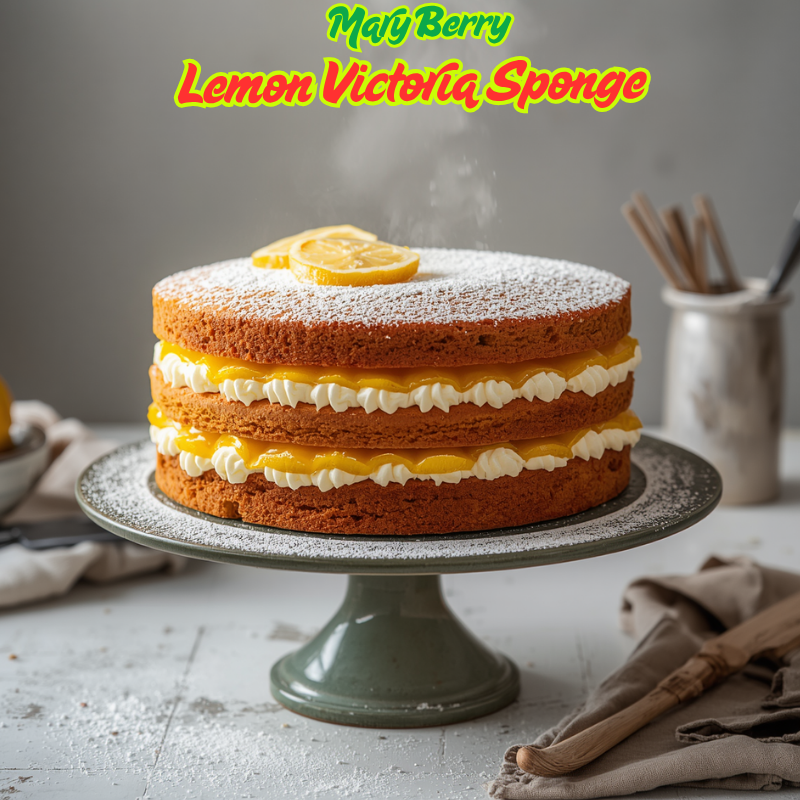
Creating the Ideal Texture and Flavor Balance
Common Points Where Results Fall Short
Under-creaming butter and sugar produces a flat, dense sponge — the air beaten in at this stage is what raises the cake. Overmixing after the flour goes in collapses that structure.
Easy Adjustments That Make a Difference
Bring butter and eggs to room temperature before starting — cold fat resists creaming and cold eggs curdle batter. Weighing each layer of batter gives consistently level sponges.
Fresh Ways to Reinvent a Classic Mary Berry Lemon Victoria Sponge Recipe
Flavor Ideas to Experiment With
- Berry Contrast: Layer fresh raspberries alongside the buttercream. Their tartness sharpens the lemon and makes the whole thing feel more like a dessert.
- Zesty Boost: Add extra lemon zest to the batter and a squeeze of juice to a drizzle icing on top. The result is sharper and more pronounced.
- Creamy Center: Replace half the buttercream with lightly whipped cream for a more delicate filling that showcases the lemon rather than competing with it.
Presenting the Cake in a Way That Feels Special
Visual Touches That Enhance Appeal
Dust the top with icing sugar just before serving. A few curls of lemon zest add elegance without overcomplication.
Pairings That Complement the Flavor
Earl Grey tea is the most natural companion — the bergamot quality lifts the lemon in an unexpected way. Sparkling elderflower is equally well matched for something cooler and lighter.
Keeping the Cake Fresh and Flavorful for Longer
Once filled, this citrus sponge keeps in the fridge for up to two days, though layers soften slightly against the buttercream. Unfilled sponge wrapped in cling film stays fresh at room temperature for three days or can be frozen for two months.

Ending on a Light and Memorable Note
- Lingering Freshness: citrus notes stay clean and bright.
- Gentle Sweetness: balanced flavour that never tips into excess.
- Simple Elegance: a bake that feels effortless and quietly refined in every bite.
Frequently Asked Questions About Mary Berry Lemon Victoria Sponge Recipe
Can I use bottled lemon juice instead of fresh?
Fresh juice is strongly recommended. Bottled lemon juice carries a bitterness that affects the buttercream. For zest, fresh lemons are the only option.
Why did my sponge sink in the middle?
Under-creaming the butter and sugar, or opening the oven too early. Ensure the mixture is genuinely pale before adding eggs, and avoid the door for the first 20 minutes.
How do I get the layers to rise evenly?
Weigh the batter into each tin. Visual estimation is unreliable — small differences in depth become obvious in the finished layers.
Can I make the sponge layers ahead of time?
Yes. Bake the day before, wrap tightly once cooled, and store at room temperature. Fill on the day of serving for the freshest result.
What filling works best in a lemon Victoria sponge?
Lemon buttercream is classic. Lemon curd beneath it adds tartness. Lightly whipped cream makes a lighter alternative that suits a dessert occasion.
How long does a filled lemon sponge last?
Up to two days in the fridge once filled. The sponge softens slightly against the buttercream but the flavour remains excellent.
Can I freeze a Victoria sponge?
Freeze unfilled layers only, for up to two months. Fill after thawing at room temperature — filled sponges do not freeze well.

Mary Berry Lemon Victoria Sponge Recipe
Course: DessertCuisine: BritishDifficulty: Easy4
servings30
minutes40
minutes300
kcalIngredients
Flour
Sugar
Butter
Eggs
Baking powder
Lemon zest
Lemon curd / cream
Directions
- Mix butter, sugar, eggs.
- Add flour + baking powder + zest.
- Divide into tins and bake.
- Cool, then sandwich with lemon curd/cream.
Notes
- Use room temp ingredients
- Don’t overmix
- Cool before filling