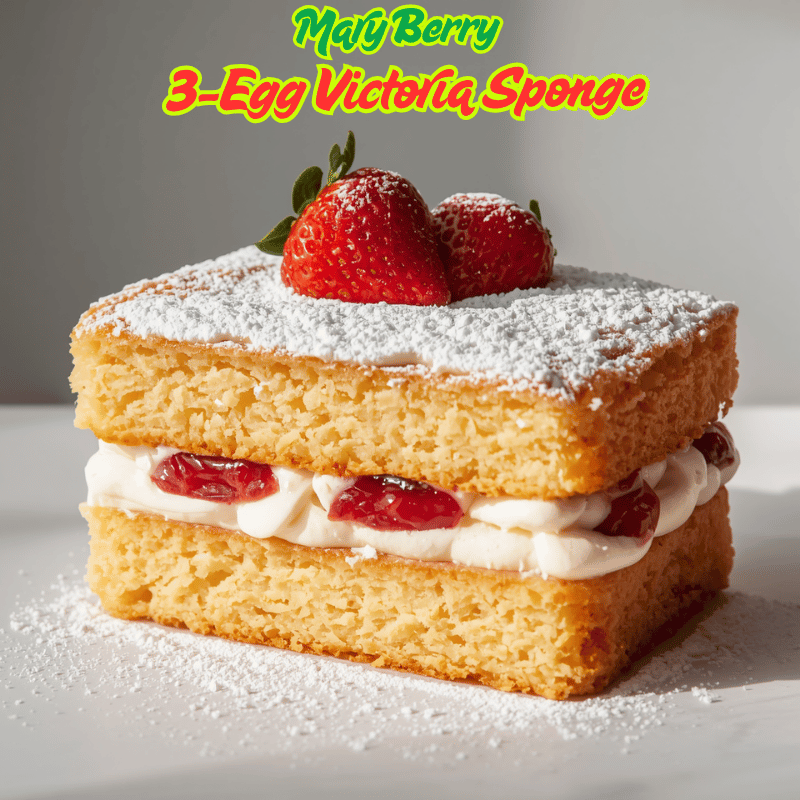
There is something quietly reassuring about a recipe built on three eggs. The Mary Berry 3-Egg Victoria Sponge Recipe works because the mathematics are honest: three eggs weigh roughly 175 grams, and butter, sugar, and flour are measured to match. The result is a light sponge cake that does not need clever technique to succeed. Two golden, tender layers filled with jam and cream, dusted with icing sugar and left to speak for itself. Just a properly made Victoria sponge cake that earns its place at any table.
The Essential Balance That Defines a Mary Berry 3-Egg Victoria Sponge Recipe
How Key Ingredients Work Together Seamlessly
The equal-weight method — butter, caster sugar, and self-raising flour matched to the three eggs — gives this classic sponge recipe its consistency. When all four components balance, the batter emulsifies properly and produces a crumb neither too dense nor too fragile. Soft butter traps the air the sponge needs; the eggs bind and lend the characteristic golden colour.
Small Details That Elevate the Overall Bake
A teaspoon of vanilla extract makes the crumb smell and taste noticeably warmer. Half a teaspoon of baking powder added to the self-raising flour gives a slightly more confident and even rise.
From Mixing Bowl to Oven: Building the Perfect Mary Berry 3-Egg Victoria Sponge Recipe
- Batter Consistency Stage: Beat the softened butter and caster sugar together for four to five minutes until pale, fluffy, and significantly increased in volume. The air built in at this stage determines the lightness of the finished sponge.
- Gentle Handling Process: Beat in the three eggs one at a time, adding a tablespoon of flour with the last egg. Sift the remaining flour over the surface and fold using a large metal spoon in wide, sweeping arcs.
- Even Distribution: Divide the batter between two greased and lined 20cm tins, weighing each portion for accuracy. Smooth the surface of each and place both on the same oven shelf.
- Baking Rise: Bake at 180°C (160°C fan) for 20 to 25 minutes until golden and springing back when the centre is gently pressed. Cool in the tins for five minutes before turning out.
Achieving Lightness While Maintaining Structure
Where Results Can Fall Flat
Under-creaming and opening the oven too early both produce a flat, dense bake. Cold butter resists creaming entirely and must spend at least an hour at room temperature before going into the bowl.
Easy Fixes for a Better Outcome
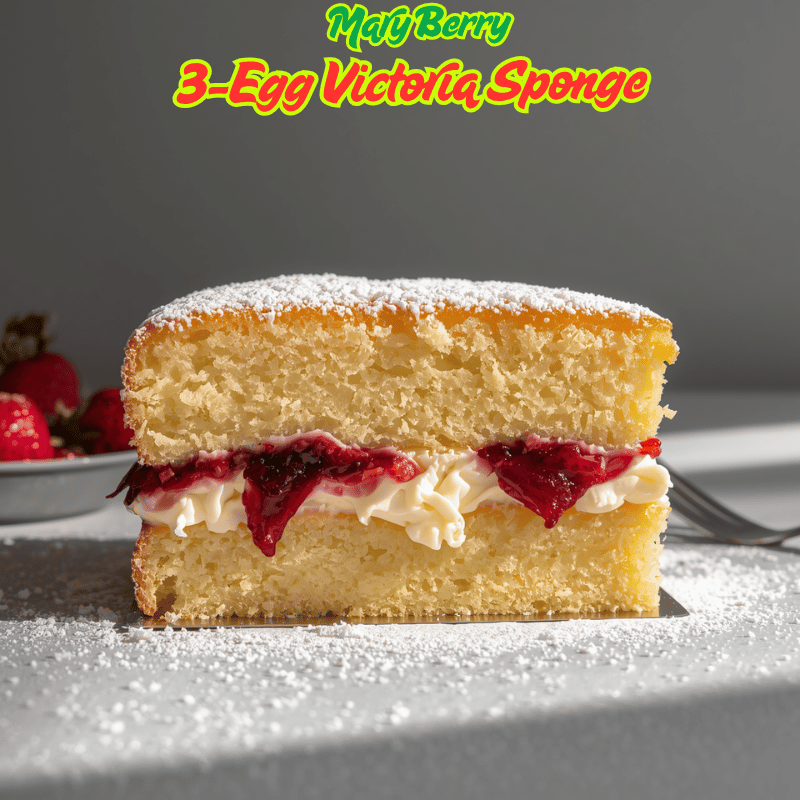
Weigh the batter into each tin rather than guessing. An uneven divide produces layers of different depths, immediately visible once assembled. Cool each layer completely before filling — cream on a warm sponge melts within minutes.
Simple Ways to Add a Personal Twist to a Mary Berry 3-Egg Victoria Sponge Recipe
Flavor Ideas to Experiment With
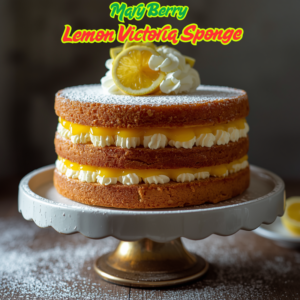
- Jam Layer Variation: Replace strawberry jam with lemon curd or blackcurrant for a sharper, more complex counterpoint to the cream.
- Citrus Hint: Fold lemon or orange zest into the batter before dividing — it warms the flavour without changing the character.
- Cream Upgrade: Replace lightly whipped cream with mascarpone mixed with icing sugar and vanilla for deeper richness.
Presenting a Sponge Cake That Feels Effortlessly Elegant
Visual Touches That Enhance Appeal
Dust the top generously with icing sugar through a fine sieve immediately before serving. A clean, unhurried dusting is all a well-made Victoria sponge cake needs to look properly finished.
Pairings That Complement the Flavor
Builder’s tea — strong, with a splash of milk — is the most traditional companion. A pot of Darjeeling served without milk also complements the jam and cream filling without competing with either.
Keeping the Sponge Fresh and Enjoyable Mary Berry 3-Egg Victoria Sponge Recipe
Filled with cream, the cake keeps in the fridge for two days. Bring to room temperature for 30 minutes before serving — cold sponge loses its lightness. Unfilled layers keep for three days, or freeze for up to two months.
Ending on a Soft and Satisfying Note
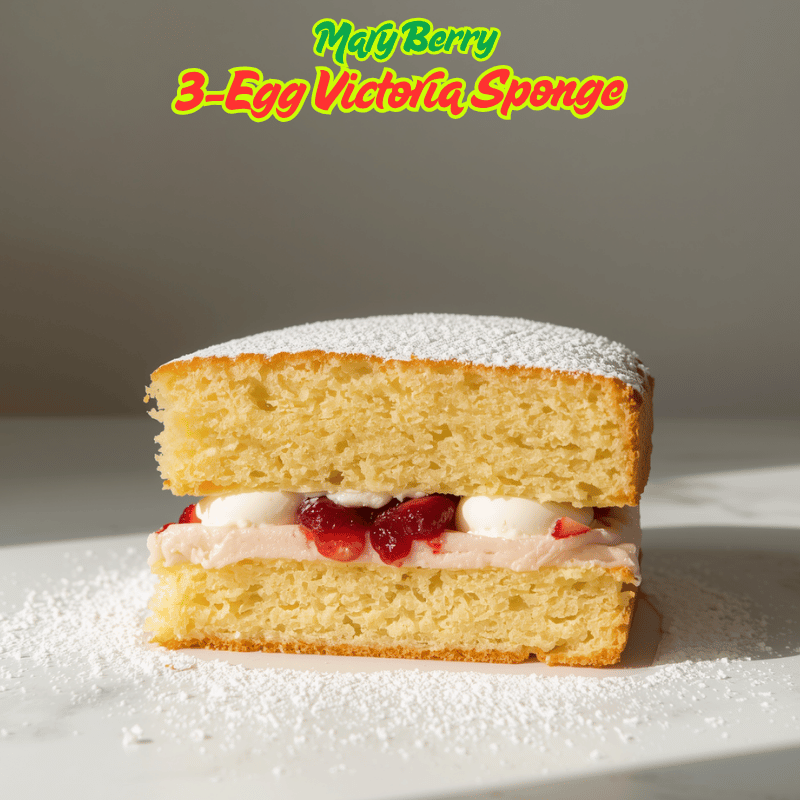
- Light Crumb Feel: sponge remains airy and genuinely delicate in every slice.
- Balanced Sweetness: gentle flavour that never tips into heaviness.
- Timeless Simplicity: a bake that always feels exactly as it should.
FAQs
Why is the 3-egg formula so reliable for Victoria sponge?
Three medium eggs weigh roughly the same as the butter, sugar, and flour. Matched weights produce a batter that behaves predictably every time.
Can I use large eggs instead of medium?
Yes. Large eggs are slightly heavier, so weigh them and adjust the other ingredients to match.
What happens if I overmix the batter?
Overmixing develops gluten and produces a tight crumb. Fold the flour in until it just disappears and stop.
How do I get both layers to rise evenly?
Weigh the batter into each tin. Dividing by eye almost always produces unequal layers — visible once assembled.
What is the best filling for a Victoria sponge?
Strawberry or raspberry jam with lightly whipped cream is the classic. Good ingredients are worth prioritising here — simplicity means quality has nowhere to hide.
How long does a Victoria sponge stay fresh?
Filled with cream, it keeps in the fridge for two days. Unfilled layers stay fresh at room temperature for up to three days.
Can I freeze a Victoria sponge cake?
Freeze unfilled layers individually in cling film for up to two months. Cream fillings do not freeze.

Mary Berry 3-Egg Victoria Sponge Recipe
Course: PuddingsCuisine: BritishDifficulty: Easy4
servings30
minutes40
minutes300
kcalIngredients
Butter (soft)
Sugar
3 Eggs
Self-raising flour
Baking powder
Milk
Strawberry jam
Whipped cream (optional)
Directions
- Preheat oven to 180°C.
- Cream butter + sugar.
- Add 3 eggs (one by one).
- Fold in flour + baking powder + milk.
- Divide into 2 tins, bake 20–25 mins.
- Cool completely.
- Spread jam (and cream), sandwich together.
Notes
- Use equal amounts for best texture
- Don’t overmix batter
- Cool before filling
- Dust with icing sugar for finish