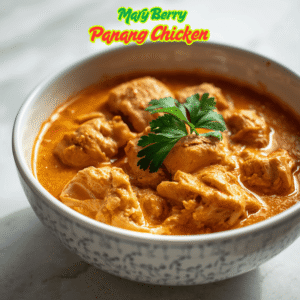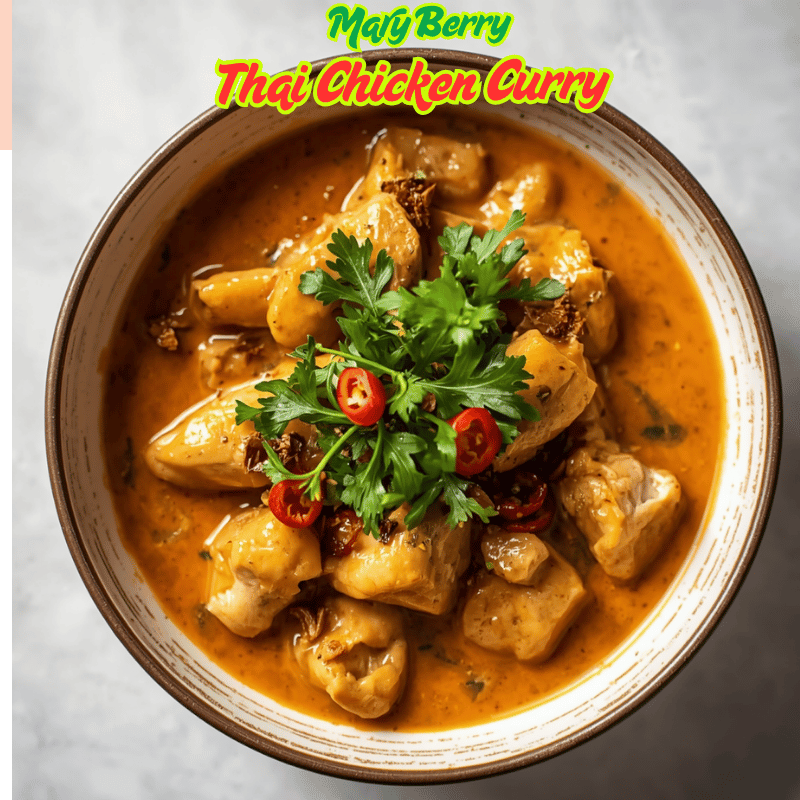
The Mary Berry Thai Chicken Curry Recipe works because it respects this process — the aromatic chicken curry is not rushed, not overcomplicated, and not watered down. It carries the brightness and depth of genuinely good Thai cooking, adapted for home without condescension. Tender chicken, a coconut chicken curry sauce of real character, and the balance of fish sauce, sugar, and lime that separates the great from the merely adequate.
Exploring the Flavor Profile of Mary Berry Thai Chicken Curry Recipe
How Sweet, Spice, and Creaminess Work Together
Thai curry paste contains the flavor architecture of the dish — lemongrass, galangal, kaffir lime, chili, and shrimp paste fused into a dense blend that opens only when it hits hot fat. Full-fat coconut milk transforms this into a sauce. Fish sauce provides the saline depth that salt cannot replicate. Chicken thighs over breast; their fat keeps them tender.
Subtle Elements That Define Authentic Taste
Kaffir lime leaves and bruised lemongrass simmered in the sauce add fragrance that the paste alone cannot provide. A teaspoon of fish sauce adjusted at the end sharpens everything noticeably.
Cooking the Mary Berry Thai Chicken Curry with a Focus on Balance and Timing
- Aromatic Base Start: Heat two tablespoons of thick coconut cream from the top of an unmixed tin over medium-high heat. Add the curry paste and fry for two minutes until it sizzles, darkens slightly, and releases its layered fragrance.
- Coconut Blend Stage: Pour in the remaining coconut milk with the kaffir lime leaves and bruised lemongrass. Add fish sauce and sugar. Simmer for five minutes until the sauce deepens in color and thickens slightly.
- Chicken Cooking Phase: Add the chicken thighs and nestle them into the sauce. Simmer gently for 20 minutes, turning once, until the chicken is cooked through and has absorbed the surrounding aromatics.
- Final Adjustment: Remove the lemongrass and lime leaves. Taste carefully — fish sauce for salt, sugar for sweetness, lime juice for brightness.
Creating Depth Without Overpowering the Dish
Where Thai Curry Can Lose Its Balance
A thin, watery sauce results from low-fat coconut milk — full-fat is non-negotiable. Insufficient frying of the paste is the second issue; if not properly cooked in hot fat, the curry tastes raw regardless of simmering time.
Simple Tweaks for a More Refined Result
Always fry the paste in undiluted coconut cream before anything else goes in. This decides the depth of the finished dish and cannot be recovered if it is rushed.
Creative Ways to Add Your Own Twist to Mary Berry Thai Chicken Curry Recipe
Flavor Ideas to Experiment With
- Spice Control: Adjust the quantity of curry paste rather than adding dried chili — less for a milder aromatic chicken curry, more for genuine heat.
- Herb Finish: Scatter Thai basil or coriander over the finished curry just before serving. The freshness cannot be replicated by simmered aromatics.
- Nutty Addition: Stir a tablespoon of natural peanut butter into the sauce for added depth and a more substantial texture.
Serving a Thai Curry That Feels Complete and Inviting
Presentation Ideas That Enhance the Dish
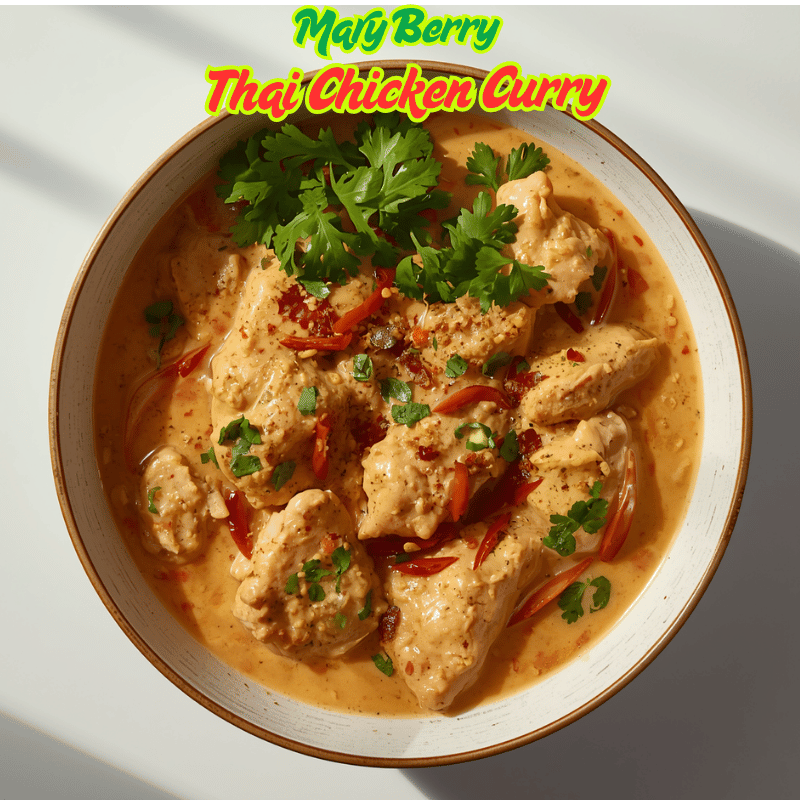
Serve in bowls deep enough to hold the sauce generously. Fresh coriander, a thin slice of chili, and a wedge of lime complete the presentation.
Pairings That Complement the Flavor
Jasmine rice is essential alongside this dish — its fragrance echoes the aromatics. A simple cucumber salad cuts through the richness and provides the cooling contrast the spiced Thai curry demands.
Keeping Your Mary Berry Thai Chicken Curry Fresh and Flavorful
The coconut chicken curry keeps in the fridge for three days. Reheat gently over low heat with a splash of coconut milk to loosen. Freeze for up to two months.
Ending on a Rich and Aromatic Note
- Layered Flavor: spice and creaminess remain in perfect balance through every mouthful.
- Smooth Texture: sauce stays rich and silky without ever feeling heavy.
- Lasting Impression: a dish that feels vibrant, comforting, and genuinely complete.
FAQs
Can I use red or green curry paste interchangeably?
Red paste is earthier and richer; green is brighter and sharper. Use whichever suits the result you want.
How do I make the curry less spicy for children?
Reduce the paste to one tablespoon and increase the coconut milk. An extra tablespoon of coconut cream softens the heat.
What type of coconut milk produces the best sauce?
Full-fat tinned coconut milk is essential. Low-fat produces a watery result that undermines the paste’s depth.
Can I prepare Thai chicken curry in advance?
Yes. The curry can be made up to two days ahead — the flavor often improves overnight. Reheat gently with a little coconut milk.
What vegetables work well in this curry?
Courgette, aubergine, baby corn, and red pepper hold up well. Add firmer vegetables with the chicken and softer ones in the final five minutes.
Is it better to use chicken breast or thighs?
Chicken thighs are strongly preferred — their fat keeps them moist, and they absorb the flavor more thoroughly than breast.
Can I make this curry without fish sauce?
Yes. Replace fish sauce with light soy sauce or tamari in equal quantities.
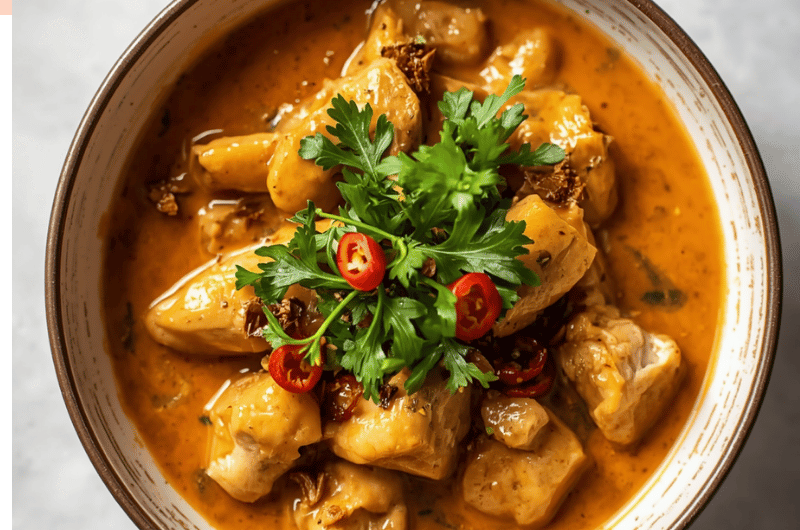
Mary Berry Thai Chicken Curry Recipe
Course: Desserts4
servings30
minutes40
minutes300
kcalIngredients
Chicken (sliced)
Thai curry paste (red/green)
Coconut milk
Onion or bell pepper
Garlic + ginger
Fish sauce or salt
Lime juice
Oil
Directions
- Heat oil, cook garlic + ginger.
- Add curry paste, cook briefly.
- Add chicken, cook till sealed.
- Pour coconut milk, mix well.
- Add veggies, simmer 10–15 mins.
- Season with fish sauce + lime juice.
Notes
- Adjust spice by curry paste
- Keep sauce creamy, not too thick
- Don’t overcook chicken
- Serve with rice for best taste