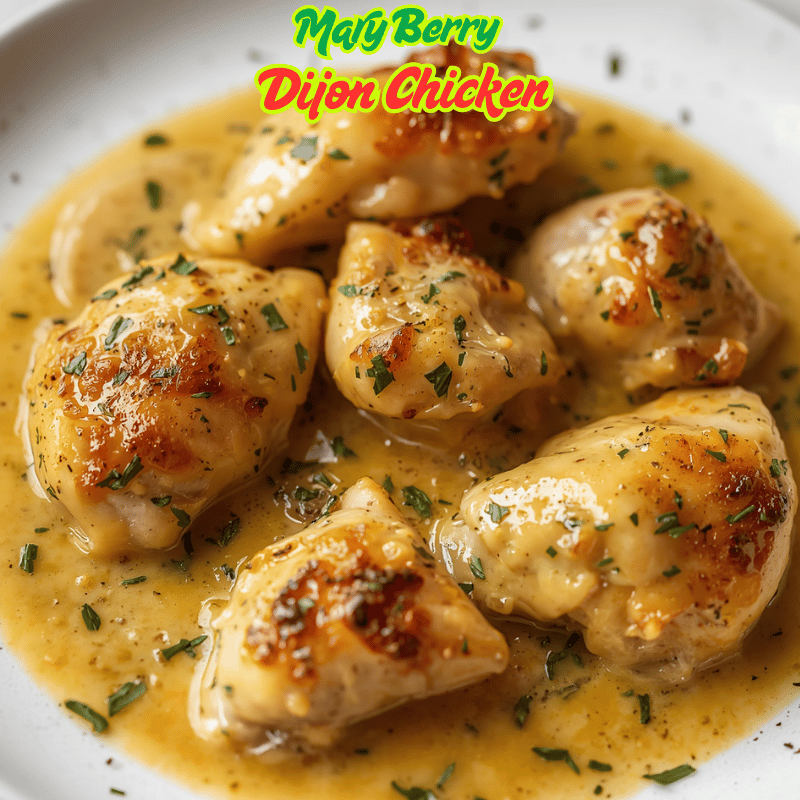
The Mary Berry Dijon Chicken Recipe brings together the sharp, complex heat of good Dijon mustard, the richness of double cream, and properly seared chicken in a dish that feels both elegant and completely achievable. A French-style chicken dish in the most welcoming sense — unhurried in its flavour development, generous with its sauce. The mustard does not shout. It hums.
The Flavor Balance Behind a Perfect Mary Berry Dijon Chicken Recipe
How Each Ingredient Builds Depth and Creaminess
Dijon mustard does the heaviest lifting — its smooth, acidic heat disperses evenly through the cream without graininess. Double cream provides richness and holds the sauce without splitting. Chicken thighs are preferable to breast; their fat content keeps them moist through sustained pan heat. Shallots cooked slowly in the same fat lay the sweet aromatic base.
Subtle Enhancements That Refine the Sauce
A bay leaf simmered in the sauce softens the sharpness of the mustard without erasing it. A teaspoon of Dijon stirred in off the heat at the end sharpens the flavour noticeably.
Cooking the Mary Berry Dijon Chicken Recipe
- Chicken Preparation Stage: Season the chicken thighs generously and sear in a wide, heavy pan over moderately high heat until the skin is deeply golden — around four to five minutes per side. Resist moving them before they release naturally.
- Sauce Building Phase: Reduce the heat and soften the sliced shallots in the remaining fat for eight minutes. Add a splash of dry white wine, reduce by half, then pour in the stock. Stir in the Dijon mustard before the cream goes in.
- Flavor Development: Return the chicken to the pan, nestled into the sauce, with a bay leaf and thyme. The chicken juices release into the cream and the mustard deepens as the heat works through it.
- Final Simmer: Simmer gently, uncovered, for 20 to 25 minutes until the chicken is cooked through and the sauce has thickened to a coating consistency. Stir in a final teaspoon of Dijon off the heat.
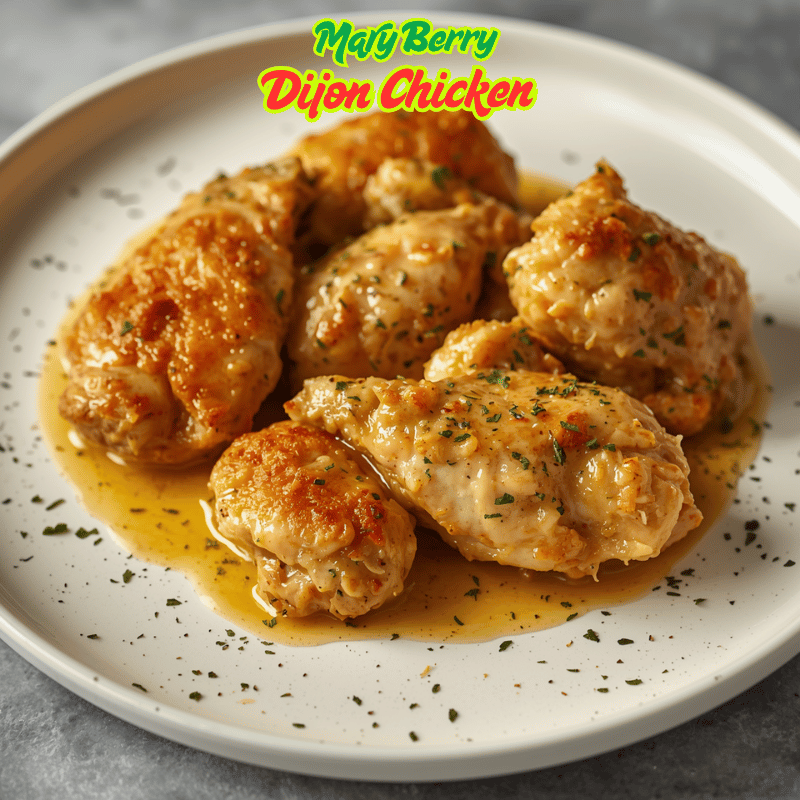
Achieving Tender Mary Berry Dijon Chicken Recipe with a Silky Sauce
Where the Dish Can Lose Balance
The most common failure is splitting — cold cream added to a hot pan, or boiling once the cream is in. Under-seasoning is equally common; cream dulls salt and the dish needs more seasoning than might seem obvious.
Simple Adjustments for Better Results
Bring the cream to room temperature before adding it to the pan. Keeping the heat at a steady, gentle simmer — rather than letting it climb — is the most impactful thing for sauce stability.
Creative Ways to Enhance Mary Berry Dijon Chicken
Flavor Ideas to Experiment With
- Herb Upgrade: Add fresh tarragon to the sauce — it has a natural affinity with Dijon that deepens both and makes the dish more distinctly French.
- Cream Variation: Replace half the double cream with crème fraîche for a tangier, slightly less rich sauce.
- Wine Touch: Use dry vermouth instead of white wine for a more complex, botanical depth.
Serving the Dish in a Way That Feels Restaurant-Worthy
Visual Touches That Enhance Appeal
Spoon the sauce generously over the chicken rather than leaving it pooled beneath. A few fresh herb leaves scattered at the last moment add colour and make the dish look more composed.
Pairings That Complement the Flavor
Steamed rice absorbs the sauce without competing. Buttered egg noodles work equally well. A dressed green salad alongside cuts through the richness.
Keeping Leftovers Fresh and Flavorful
The dish keeps in the fridge for up to three days and reheats well in a covered pan with a splash of stock. The flavour deepens overnight, making it an excellent candidate for batch cooking.
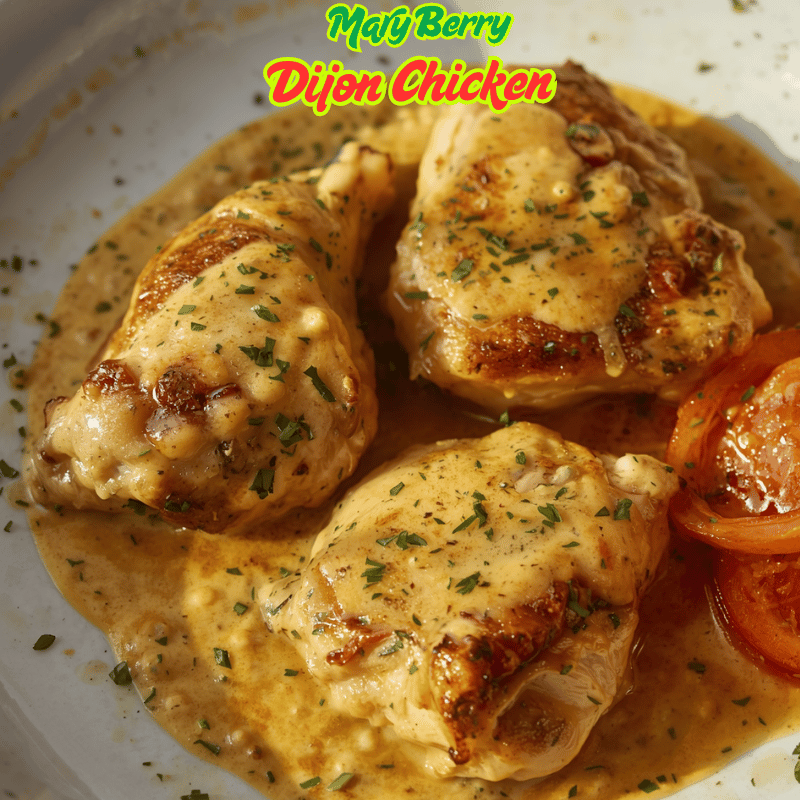
Ending on a Rich and Comforting Note
- Creamy Finish: sauce stays smooth, silky, and deeply flavourful through every bite.
- Balanced Heat: mustard adds gentle, persistent depth without sharpness.
- Elegant Simplicity: a dish that feels refined but demands nothing complicated of its cook.
Frequently Asked Questions About Mary Berry Dijon Chicken Recipe
Can I use wholegrain mustard instead of Dijon?
Yes. Wholegrain produces a more textured, slightly milder result. Dijon creates a smoother sauce — but both work well.
What cut of chicken works best for this recipe?
Bone-in, skin-on chicken thighs produce the best result. Boneless thighs also work. Breast dries out more easily and is less forgiving.
Can I make this recipe dairy-free?
Yes. Replace double cream with coconut or oat cream. Keep the heat gentle when adding the substitute.
How do I stop the cream sauce from splitting?
Keep the heat gentle once the cream is in and never let it boil. Adding cream at room temperature helps significantly.
Can I make Dijon chicken ahead of time?
Yes. Make the dish, cool, and refrigerate for up to two days. Reheat gently with a splash of stock.
What wine should I use in the sauce?
A dry white such as Sauvignon Blanc or Pinot Grigio works best. Dry vermouth is an excellent alternative.
How do I thicken the sauce if it is too thin?
Remove the chicken and simmer the sauce uncovered for five to eight minutes. The reduction method preserves the clean flavour better than flour.
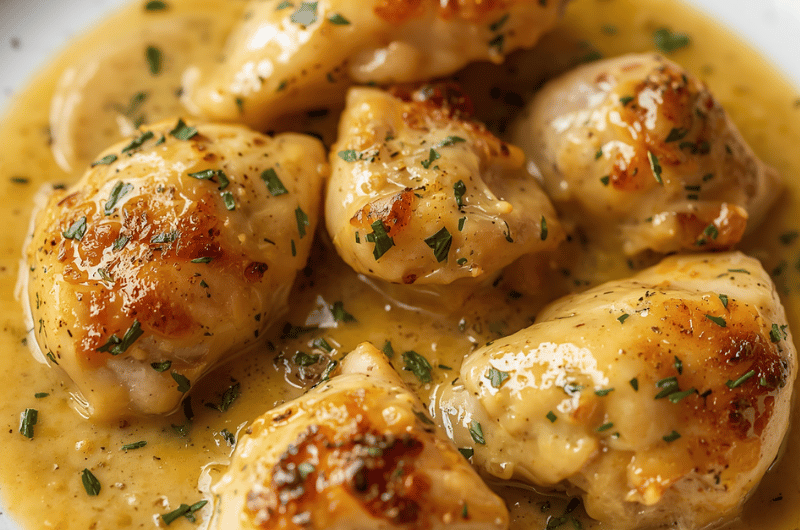
Mary Berry Dijon Chicken Recipe
Course: DinnerCuisine: BritishDifficulty: Easy4
servings30
minutes40
minutes300
kcalIngredients
Chicken breasts
Dijon mustard
Cream
Garlic
Butter or oil
Chicken stock (optional)
Salt & pepper
Parsley (optional)
Directions
- Season chicken and brown in butter/oil.
- Remove chicken, cook garlic.
- Add Dijon mustard + cream + stock.
- Stir to make smooth sauce.
- Return chicken, simmer till cooked.
- Garnish and serve.
Notes
- Don’t overcook chicken (keep juicy)
- Adjust mustard for spice level
- Sauce should be creamy, not too thick
- Fresh parsley adds nice finish